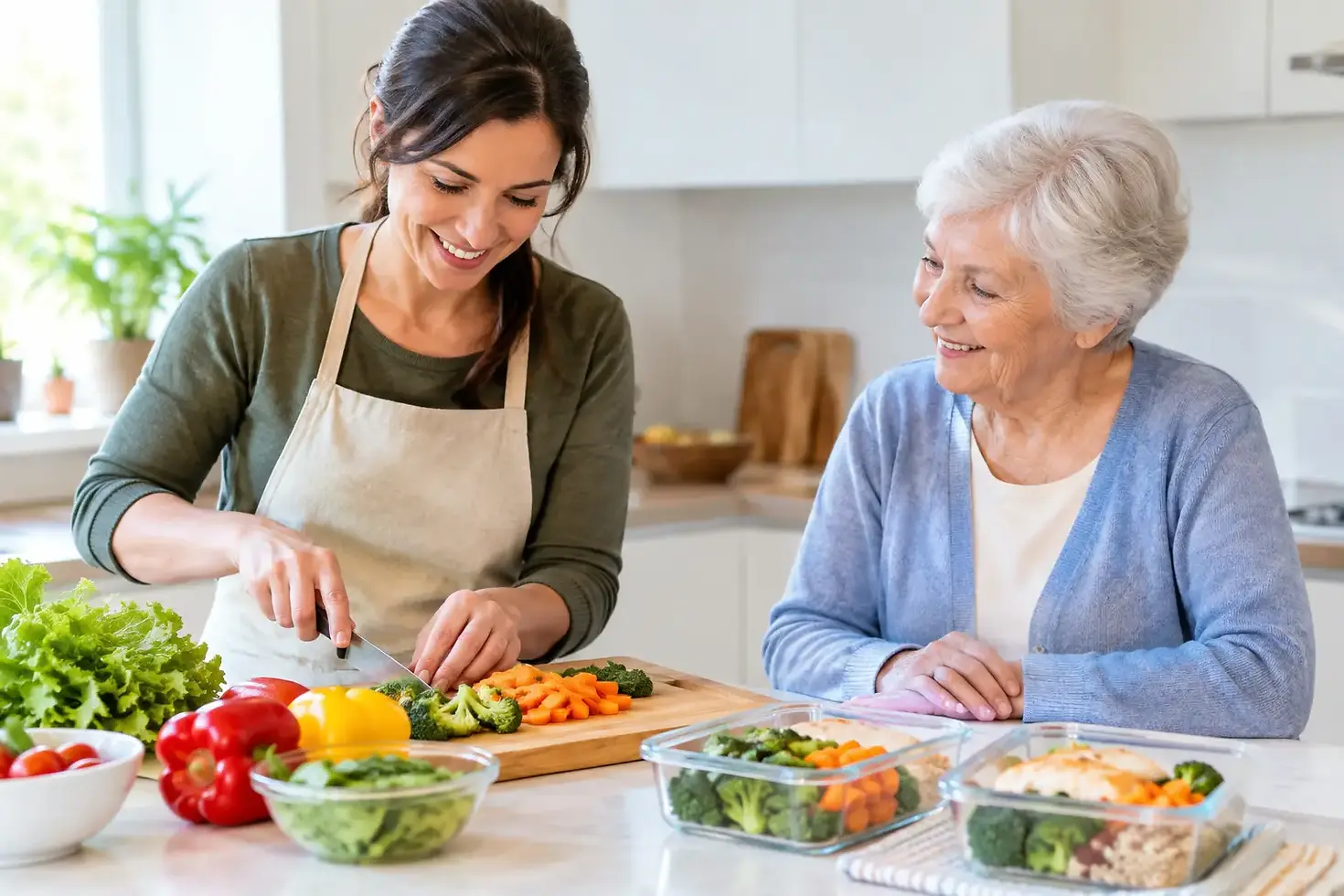
Meal Preparation for Elderly at Home Made Safer

A favorite meal can bring more than nutrition to the table. It can preserve familiar routines, offer comfort after a difficult day, and give an older adult a meaningful sense of choice. Thoughtful meal preparation for elderly at home helps make those moments safer and less stressful, especially when family members are balancing work, children, appointments, and caregiving responsibilities.
The goal is not to make every meal perfect. It is to create a reliable routine that respects your loved one’s preferences, supports their daily needs, and reduces the risks that can come with cooking, shopping, and eating alone.
Start With the Person, Not the Menu
A practical meal plan begins by understanding how your loved one actually eats. Some people enjoy three full meals a day. Others have a lighter appetite and do better with smaller meals and snacks offered throughout the day. Changes in mobility, energy, taste, dental comfort, memory, or hand strength can all affect what feels manageable.
Talk with your loved one about foods they enjoy, family recipes they miss, and foods they prefer to avoid. This conversation helps protect dignity. A plan built entirely around what seems easiest for others may leave a person feeling overlooked or pressured.
Also consider the everyday details. Can they safely open containers? Use a microwave? Pour a drink without spilling? Remember whether they have eaten? The answers shape the kind of support that will be most useful. Sometimes the right solution is preparing several ready-to-heat portions. In other situations, having a caregiver prepare and serve meals during a scheduled visit provides more comfort and oversight.
Build Meal Preparation for Elderly at Home Around Safety
Kitchen safety deserves just as much attention as the food itself. A person who has always cooked independently may not recognize that a new balance concern, reduced vision, or fatigue has changed the risks. Families can support independence by adjusting the routine rather than taking every task away.
Keep frequently used items within easy reach, and move heavy cookware, step stools, and sharp tools out of the daily workflow. Choose lightweight dishes with easy-grip handles when possible. A stable chair near the counter can provide a place to rest during simple tasks, but it should not create a tripping hazard.
Prepared foods need safe storage as well. Label containers with the meal name and the date they were prepared. Use clear, large writing that is easy to read. Divide food into single servings so your loved one does not need to lift a heavy dish, estimate portions, or repeatedly reheat the same container.
It also helps to simplify instructions. Instead of leaving a note that says, “Heat until ready,” write a short, specific direction such as “Microwave for 90 seconds, stir, then heat for 30 more seconds.” Test the instructions yourself before relying on them. Appliances vary, and the safest plan is the one your loved one can follow confidently.
Plan for Nourishment Without Making Food Feel Clinical
Meals do not need to be complicated to be satisfying. A balanced plate can often come from familiar ingredients: an egg with toast and fruit in the morning, soup and a sandwich for lunch, or baked chicken with vegetables and rice for dinner. Soft foods, soups, casseroles, oatmeal, yogurt, and smoothies can be useful when chewing or appetite is a concern, but variety still matters.
Protein-rich foods can help make a lighter meal more filling. Beans, eggs, fish, poultry, yogurt, cheese, and nut butters are all options, depending on personal preferences and any dietary guidance the family has received. Fruits, vegetables, whole grains, and fluids add color and variety without requiring elaborate preparation.
If your loved one follows a prescribed eating plan or has food-related restrictions, keep those instructions visible and share them with everyone who helps. Consistency matters more than trying a new health trend. When appetite has changed significantly or eating has become difficult, families should seek guidance from the appropriate healthcare professional rather than guessing at a solution.
Make Grocery Shopping Easier to Maintain
A meal routine only works if the kitchen stays stocked. Rather than planning a week of entirely different recipes, choose a small number of flexible ingredients that can become several meals. Cooked chicken might be used in a sandwich one day, a salad the next, and a simple soup later in the week. Frozen vegetables can be just as practical as fresh ones and reduce food waste.
Create a shared grocery list that family members can update. Include staples your loved one uses regularly, such as milk, bread, coffee, fruit, eggs, or favorite snacks. Check the refrigerator and pantry before shopping, and pay attention to expiration dates. This small habit can prevent duplicate purchases and reduce the chance that older food gets pushed to the back and forgotten.
For many families, the most sustainable choice is a mix of home-cooked food and convenient options. Frozen individual meals, low-sodium soups, pre-cut produce, rotisserie chicken, and prepared salads can be helpful on busy days. Convenience is not a failure of caregiving. It can be a practical way to ensure there is always something accessible to eat.
Watch for Small Changes at Mealtime
Mealtime often reveals changes that are easy to miss during a quick phone call. A loved one may start leaving food untouched, drinking less, struggling with utensils, or relying on the same snack for every meal. These changes do not always mean there is an emergency, but they deserve attention.
Approach the conversation with curiosity rather than correction. Ask whether a food is difficult to prepare, no longer appealing, too hard to chew, or simply too much effort to clean up afterward. The answer may be straightforward. A person who stops making lunch because opening cans is painful may do well with easy-open containers or prepared portions.
Eating is also social. When someone lives alone, the effort of cooking for one can feel discouraging. Sharing a meal, setting the table together, or having someone nearby while food is prepared can make meals feel like part of the day again instead of another chore.
When Family Support Needs a Reliable Routine
Family caregivers often begin by dropping off groceries, preparing meals on weekends, or calling with reminders. These gestures matter, but they can become difficult to sustain when care needs grow or schedules change. The pressure can be especially heavy when one person becomes the default caregiver.
In-home assistance can provide dependable help with grocery organization, meal planning, food preparation, kitchen cleanup, and companionship during meals. It can also give families a clearer picture of what is working day to day. The purpose is not to replace a loved one’s choices. It is to make those choices easier to carry out safely at home.
At Stand By Me Home Care, caregivers can support individualized meal routines while treating each person’s preferences, culture, and independence with respect. For families in Clark County, a free care consultation can help identify whether occasional meal support, regular homemaking assistance, or a broader daily routine would bring the greatest relief.
A well-prepared meal does not have to be elaborate to be meaningful. When food is familiar, accessible, and shared with care, it can help an older adult feel more at home in the place they know best.


Comments